
Wow, that’s neat.
Browser extension wallets are everywhere now, and they feel indispensable.
They sit in the toolbar, respond to dapps, and sign txns quickly.
But adoption brings a mess of UX choices and security tradeoffs that surprise people.
When you dig in, though, you see patterns: permissions models that leak context, approval fatigue that leads to mistakes, and subtle UI nudges that push users to unsafe defaults if nobody actively designs against them.
Whoa, this is wild.
My first instinct was skepticism after hearing about a few wallet exploits and phishing tricks.
Something felt off about permission prompts that ask for broad access without explaining consequences.
I kept thinking there must be better UX patterns and stronger isolation to reduce risk.
Initially I thought transaction signing was the riskiest surface, but then I realized silent approvals and ambiguous contract calls are often the true hazard because people click through without context.
Really, I thought so.
I once watched a friend approve a token spend for a rug-sale in ten seconds flat. (oh, and by the way, he swore he read it—classic.)
That moment stuck with me and made me look closely at wallets that try to mitigate these human errors.
Some wallets focus on flashy features, while others prioritize clear intent and scoped permissions—those differences matter more than you expect.
My instinct said “security first,” but my head reminded me that security that nobody uses is useless, so the balance is key.
Whoa, seriously?
Yeah—UX-driven security is the game now, not just raw cryptography.
Good extension wallets separate dapp connections, show clear token approvals, and surface contract metadata so users can make informed choices.
They also minimize sticky global permissions that allow any site to interact with all accounts, which is a common footgun.
When a wallet designers thinks about default-deny, clear intent, and progressive privilege escalation, users can breathe a little easier, even when interacting with novel DeFi protocols.
Hmm, okay—here’s the rub.
Extensions run in browsers, so they inherit browser attack surfaces and the risk of malicious extensions; this is never far from your threat model.
Isolation tactics like per-dapp sessions, popup confirmations, and transaction previews help, but they are not silver bullets.
Also, there’s the subtle human layer: people are busy, distracted, and they want things to work without extra cognitive load.
So the wallet that reduces cognitive load while preserving clarity about what is being signed tends to be the one I reach for in practice.
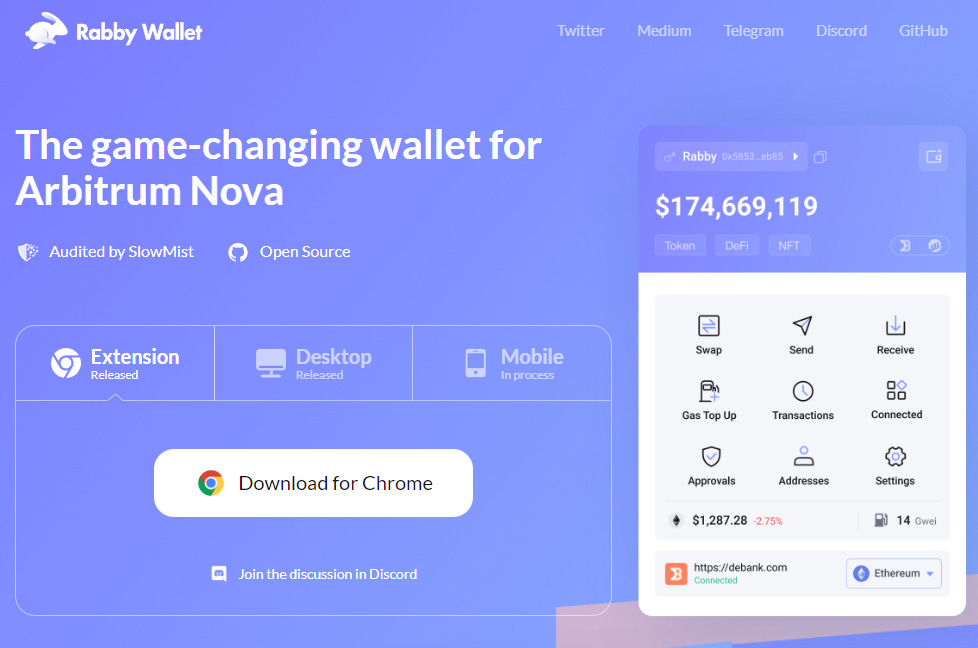
How I picked a wallet and where to get it
Wow, quick note.
In my day-to-day I try new wallets, compare approval flows, and test hardware integration because hands-on is the only way to really know.
One wallet I kept coming back to was designed as a browser-first extension but with thoughtful isolation and UX that explains contract calls instead of burying them.
If you want to try a practical option that balances usability and security, check out rabby for the extension download and setup—I’ve used it for multi-account flows and liked the way it surfaces approvals.
I’m biased, sure, but it’s helpful to have a wallet that nudges you toward safer choices without getting in the way of real DeFi work.
Wow, quick aside.
Installing an extension is easy, but configuring it well is the trick.
Start by creating a fresh account, export your seed (securely), and then connect to a testnet before funding anything large.
Enable recommended privacy and permission settings, and pair the extension with a hardware wallet if you can—this combination reduces online key exposure dramatically.
Also, audit the list of connected sites periodically; you’ll be surprised how many stale dapp links accumulate over time.
Whoa, pause for thought.
On one hand, browser extensions are super convenient for DeFi flows because they integrate directly into webpages.
Though actually, that convenience is a liability when extensions are over-privileged or when malicious sites trick people into signing complex transactions.
So I value wallets that provide contextual warnings, explicit gas and method breakdowns, and optional advanced views for power users.
Those features don’t prevent every mistake, but they raise the bar enough that automated scams find fewer easy victims.
Hmm, confessional time.
I’ll be honest: I’m not perfect at operational security, and I’ve made a dumb approval or two in the past, which is why I keep iterating my setup.
That includes using multiple accounts for different risk profiles, regularly pruning permissions, and keeping a small hot balance for daily use while the bulk stays on hardware or cold storage.
These are simple, low-tech mitigations that work well in practice and are very very important in day-to-day DeFi.
And yes, somethin’ as basic as naming accounts clearly in the extension saves me headaches more often than I’d like to admit…
Whoa, a longer think.
For builders and power users, open-source code, audits, and reproducible builds are crucial signals even if they aren’t guarantees.
On the other hand, a wallet with good UX but closed processes can still expose users to social engineering or hidden telemetry.
So I look for a mix: transparent development practices, visible third-party audits, and active community discussion about security issues and fixes.
That combination gives me the confidence to use the extension for more than trivial transactions while remaining cautious about large risk exposures.
Common questions
Q: Is a browser extension wallet safe enough for DeFi?
Short answer: yes, if you use it with sensible precautions.
Longer answer: reduce exposure by keeping most funds offline, use hardware wallets for big positions, and limit site permissions in your extension settings.
Also, test unfamiliar dapps on small amounts first so you can see real behavior without risking much.
Q: How do I manage multiple accounts without confusion?
Give each account a clear, descriptive name and purpose (trading, staking, testing), and keep balances aligned with those roles.
Use the wallet’s built-in labeling and move funds between roles with intent—don’t let accounts become unlabeled junk drawers.
It sounds obvious, but consistent habits prevent a lot of accidental approvals.
Q: Any final tips for staying safe with extension wallets?
Keep your browser lean—disable or remove unnecessary extensions, enable extension sign-in protections, and avoid installing sketchy add-ons.
Always verify the extension source, use official distribution channels, and read permissions at install time instead of blindly granting them.
And finally, audit your connected sites monthly; it’s quick and prevents many long-term exposures.
 Albanian
 English
 French
 German
 Italian